Baby Led Weaning First Foods
When you're starting baby-led weaning, it's honestly easy to overthink this part. The good news? It doesn't have to be complicated.
It's easy to think that baby's first foods should just be plain fruits or vegetables. Instead, the goal is to offer a variety of foods from different food groups, including nutrient-rich options like iron- and zinc-containing foods. Babies can actually eat adapted versions of regular family meals, as long as the food is prepared in a safe size and texture they can manage.
A balanced approach to first foods means:
- Offering nutritious, whole foods
- Including different food groups regularly
- Providing a variety of tastes and textures over time
- Serving food in shapes and sizes your baby can handle as their skills develop
Jump to:
Nutrients to Focus on for First Foods
The first 1000 days of life (from pregnancy to around age 2) are considered a critical window for growth and development, where nutrition can have long-term effects on health. Research shows that while babies need a generally nutrient-dense, well-balanced diet overall, there are a few key nutrients that deserve a bit more attention during this stage- particularly things like iron, zinc, and essential fatty acids, which play important roles in brain development, growth, and overall health.
Around 6 months, babies' nutritional needs start to shift. Milk is still important, but certain nutrients need to start coming from food too.
Iron
Iron is one of the most important nutrients to focus on early on.
Iron plays a really important role in your baby's development- especially in the first year. It's needed for making red blood cells (which carry oxygen around the body) and for supporting brain development, learning, and overall growth. Babies are born with iron stores, but these naturally start to run low around 6 months, which is why it becomes important to include iron-rich foods once solids are introduced.
You might also come across the terms heme and non-heme iron, which simply refer to different types of iron found in foods:
- Heme iron → found in animal foods (like meat and fish) and is more easily absorbed by the body
- Non-heme iron → found in plant-based foods and is a bit less easily absorbed but pairing them with vitamin C-rich foods (like fruits and vegetables) can help improve absorption.
Iron-Rich Foods
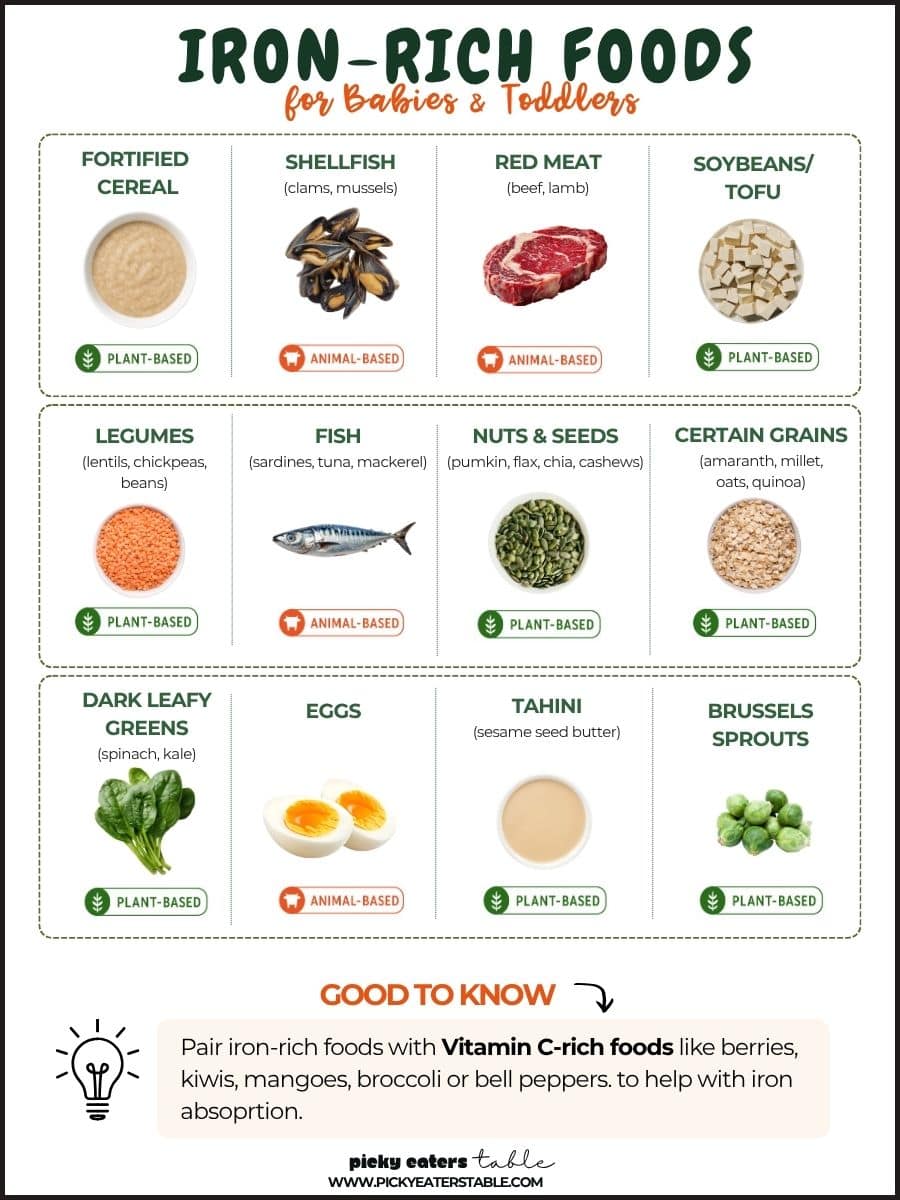
Below you'll find a simple chart with examples of iron-rich foods. It's not meant to be followed perfectly- just a helpful guide to give you ideas and inspiration
A quick note on some of these foods:
- Fish & shellfish → great sources of iron, but try to choose low-mercury options (like sardines or salmon) and vary types over time
- Nuts & seeds → always serve in a safe form (e.g. ground, crushed)
Zinc
Zinc is one of those nutrients that doesn't get talked about as much but it plays a really important role in your baby's growth and development. It supports immune function, cell growth and repair and is important for overall development.
Just like iron, babies need to start getting zinc from foods once solids are introduced. And similar to iron, there are differences in how well zinc is absorbed depending on the food source.
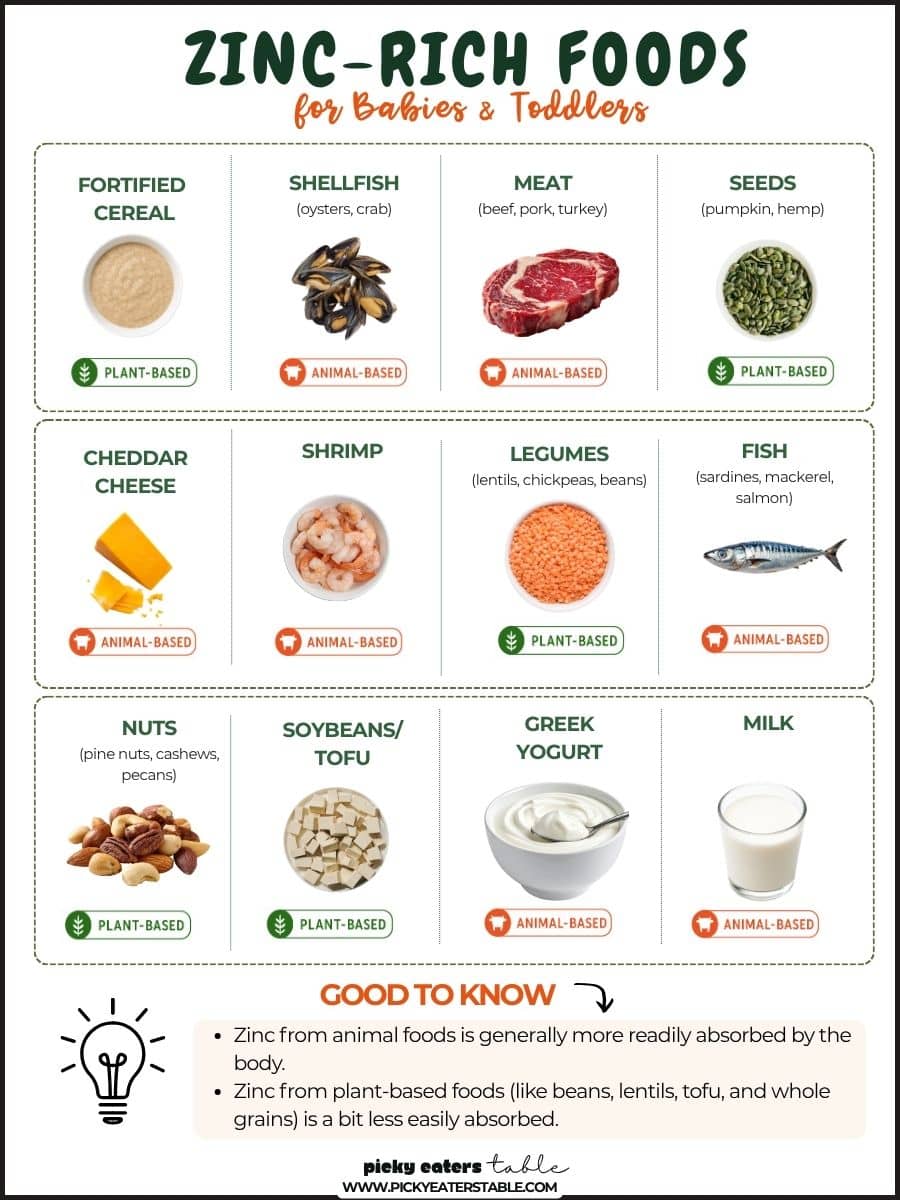
Zinc from animal foods is generally more readily absorbed by the body. Zinc from plant-based foods (like beans, lentils, tofu, and whole grains) is a bit less easily absorbed due to naturally occurring compounds like phytates.
High-Zinc Foods
Below you'll find a simple chart with examples of zinc-rich foods for some inspiration.
A quick note on some of these foods:
- Fish & shellfish → great sources of iron, but try to choose low-mercury options (like sardines or salmon) and vary types over time
- Nuts & seeds → always serve in a safe form (e.g. ground, crushed)
Essential fatty acids (especially DHA)
There are two main types of essential fatty acids: omega-3 and omega-6- and both play important roles in your baby's growth and development.
Within the omega-3 family, there are a few different types:
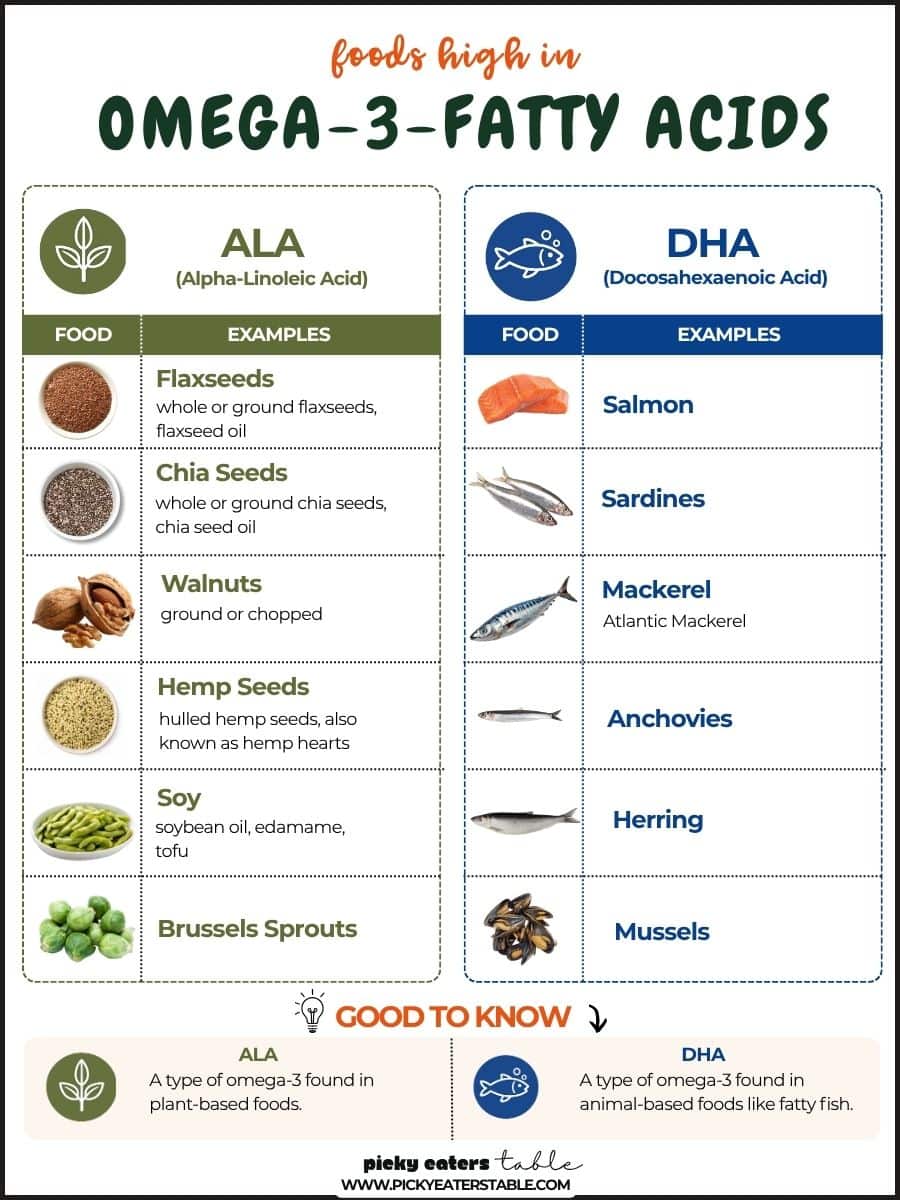
- ALA (alpha-linolenic acid) → found in plant-based foods like flaxseeds, chia seeds, hemp seeds and walnuts
- DHA (docosahexaenoic acid) → found mainly in animal-based foods, especially oily fish like salmon, sardines, and mackerel
During the first 1000 days, the brain is developing rapidly, and DHA plays a key structural role in this process.
Since the body has limited ability to produce DHA, it needs to come from the diet, making it an important nutrient to be mindful of.
The body can convert ALA into DHA- but this conversion is quite limited. So while plant-based sources of ALA are still really valuable, it's helpful to be mindful of direct DHA sources as well.
Foods High in Omega 3 Fatty Acids
A quick note on some of these foods:
- The fish listed here are generally considered low in mercury. While there are other fish that are also high in DHA, some can contain higher levels of mercury, so it's best to choose low-mercury options. E.g. Atlantic mackerel tends to be lower in mercury while King mackerel or Spanish mackerel for example tend to be much higher.
- When preparing fish or shellfish, adjust the texture and size to your baby's stage- but it should always be fully cooked (never raw or undercooked).
Protein
Protein supports growth, tissue development, and overall body function.
While babies don't need large amounts, and protein deficiency is less common in many settings, it's helpful to include protein-rich foods regularly so they can gradually meet their needs as they transition to solids.
Vitamin B12
Vitamin B12 is important for brain development, nerve function, and red blood cell formation.
It's mainly found in animal-based foods, which means babies following vegetarian or vegan diets may be at higher risk of low intake if this isn't planned for. Ensuring adequate B12 intake is important for supporting neurological development.
Iodine
Iodine plays a key role in thyroid function and brain development.
Adequate iodine intake is essential for normal cognitive development, and deficiencies during early life can impact growth and neurological outcomes. The study highlights iodine as another nutrient that may require attention depending on dietary patterns.
Foods to avoid
When starting out, it's not just about what to offer- but also which food to avoid when first starting BLW. To make things a bit easier, I've pulled together a simple list.
| Category | Foods to avoid/ limit | Why |
|---|---|---|
| Small, round or hard foods | Whole grapes, cherry tomatoes, nuts, large chunks of raw apple or carrot | Difficult to manage and may increase choking risk |
| Hard or crunchy foods | Raw vegetables, hard fruit, popcorn, crackers | Difficult to chew/gum → higher choking risk |
| Sticky foods | Thick nut butter (on its own), large globs of sticky foods | Can stick in the mouth and be hard to swallow |
| Highly processed foods | Fast food, snacks, ready meals, foods high in salt or additives | Not suitable for babies' developing systems |
| High-salt foods | Processed meats, salty snacks, added salt | Babies' kidneys can't handle excess salt |
| Added sugar foods (including hidden suggars) | Sweets, sugary cereals, sweetened yogurts, desserts- watch out for ingredients like sucrose, dextrose, fructose, glucose syrup, corn syrup... | No nutritional benefit + shapes taste preferences early |
| High saturated fat foods | Crisps, biscuits, cakes, pastries... | Not ideal for babies- check labels and aim for lower saturated fat options |
| Honey (under 1 year) | All forms of honey | Risk of infant botulism |
| Unpasteurized foods | Unpasteurized and mold-ripened dairy like soft cheeses | May contain harmful bacteria, risk of foodborne illness |
| Raw or undercooked animal foods | Raw eggs, raw fish, raw seafood, lightly cooked shellfish such as mussels or prawns | Risk of foodborne illness |
| High-mercury fish | Shark, swordfish, marlin | Can contain high levels of mercury |
| Caffeinated drinks | Tea, coffee, fizzy drinks | Not suitable for babies and can interfere with iron absorption |
| Rice milk | All rice milk (under 5 years) | May contain higher levels of arsenic |
| Fizzy drinks & undiluted fruit juice | Soda, juices served undiluted | High in sugar → increases risk of tooth decay |
Food Allergies
Studies show that introducing allergenic foods from around 6 months (not delaying them) may help reduce the risk of developing food allergies, especially for foods like peanuts and eggs.
Research also suggests that the feeding method itself (BLW vs spoon-feeding) does not significantly impact allergy development. What matters more is how early and consistently they are offered
In practice, this means you can introduce common allergens from around 6 months, just like any other foods. It's best to offer them one at a time so you can spot any reactions, and once tolerated, continue including them regularly in your baby's diet.
If your baby has eczema, an existing allergy, or there's a strong family history of allergies, it's a good idea to check with your GP or pediatrician before introducing certain foods (NHS, 2026).
Common Allergenic Foods to Introduce Carefully
| Food group | Examples |
|---|---|
| Cow's milk & dairy | Yogurt, cheese, butter |
| Peanuts & nuts | Peanut butter, nut pastes |
| Soy | Tofu, tempeh, soy yogurt |
| Gluten containing foods such as wheat, barley, rye | Bread, pasta |
| Fish & shellfish | Salmon, prawns, shrimp, mussels, clams |
| Sesame | Tahini |
| Legumes | Beans, lentils, peas |
| Sulphur Dioxide | Sometimes found in dried fruits and fruit juices |
| Eggs | |
| Celery | |
| Mustard |
FAQs
Some babies- such as those born prematurely or with certain medical or developmental conditions- may not be ready to self-feed right away and might need spoon-feeding initially. In these cases, it can still be helpful to gradually encourage self-feeding skills over time. If you're unsure, it's always best to check with your pediatrician or a qualified health professional before starting solids.
Recipes
If you're looking for more first food ideas, my Baby Food Recipe series is perfect for this stage. The recipes focus on individual or very simple ingredients, making it easier to introduce foods one at a time while getting comfortable with starting solids.
Each recipe includes both baby-led weaning instructions with age-appropriate serving suggestion and different ways to prepare and offer the food as your baby grows.
Recipes include:
- Mango Baby Food
- Asparagus Baby Food
- Peas Baby Food
- Carrot Baby Food
- Strawberry Baby Food
- Avocado Baby Food
- Sweet Potato Baby Food
- And more
And once your baby is ready for more variety and mixed meals, you can also explore my more nourishing breakfast, lunch & dinner or dessert recipes for older babies and toddlers. These recipes usually combine multiple ingredients and are great for gradually transitioning into more balanced family-style meals.
Sources
Ackland, M. L., & Michalczyk, A. A. (2016). Zinc and infant nutrition. Archives of Biochemistry and Biophysics, 611, 51-57.
Beluska-Turkan, K., et al. (2019). Nutritional gaps and supplementation in the first 1000 days. Nutrients, 11(12), 2891.
Dewey, K. G. (2013). The challenge of meeting nutrient needs of infants and young children during the period of complementary feeding: An evolutionary perspective. The Journal of Nutrition, 143(12), 2050-2054.
Domellöf, M., et al. (2014). Iron requirements of infants and toddlers. Journal of Pediatric Gastroenterology and Nutrition, 58(1), 119-129.
Gabryszewski, S. J., et al. (2025). Guidelines for early food introduction and patterns of food allergy. Pediatrics, 156(5), e2024070516.
Harvard Health Publishing. (2025, April 7). Zinc: What it does for the body, and the best food sources. https://www.health.harvard.edu/nutrition/zinc-what-it-does-for-the-body-and-the-best-food-sources
Huffman, S. L., et al (2011). Essential fats: How do they affect growth and development of infants and young children in developing countries? A literature review. Maternal & Child Nutrition, 7(Suppl 3), 44-65.
Islam, N., et al. (2026). Risk factors for the development of food allergy in infants and children: A systematic review and meta-analysis. JAMA Pediatrics. Feb 9:e256105.
Johnson, L. E. (2020). Vitamin A toxicity. Merck Manual Professional Version. Available from: https://www.merckmanuals.com/professional/nutritional-disorders/vitamin-deficiency-dependency-and-toxicity/vitamin-a-toxicity
McCann, S., Perapoch Amadó, M., & Moore, S. E. (2020). The role of iron in brain development: A systematic review. Nutrients, 12(7), 2001.
Moustarah F, Daley SF. Dietary Iron. [Updated 2024 Jan 8]. In: StatPearls [Internet]. Treasure Island (FL): StatPearls Publishing; 2026 Jan-. Available from: https://www.ncbi.nlm.nih.gov/books/NBK540969/
National Health Service. (2026). Foods to avoid giving babies and young children. https://www.nhs.uk/baby/weaning-and-feeding/foods-to-avoid-giving-babies-and-young-children/
National Health Service. (2026). Food allergies in babies and young children. https://www.nhs.uk/baby/weaning-and-feeding/food-allergies-in-babies-and-young-children/
Panzeri, C., et al. (2024). Potential micronutrient deficiencies in the first 1000 days of life: The pediatrician on the side of the weakest. Current Obesity Reports, 13(2), 338-351.
Piskin, E., et al., (2022). Iron absorption: Factors, limitations, and improvement methods. ACS Omega, 7(24), 20441-20456.
Rapley, G., & Murkett, T. (2019). Baby-led weaning: The essential guide to introducing solid foods and helping your baby to grow up a happy and confident eater. The Experiment.
Rapley, G., & Murkett, T. (2010). The baby-led weaning cookbook: Over 130 delicious recipes for the whole family to enjoy. Vermilion.
Soriano, V. X., et al. (2023). Complementary and allergenic food introduction in infants: An umbrella review. Pediatrics, 151(2), e2022058380.
Swanson, D., Block, R., & Mousa, S. A. (2012). Omega-3 fatty acids EPA and DHA: Health benefits throughout life. Advances in Nutrition, 3(1), 1-7.
Tang, M. (2018). Protein intake during the first two years of life and its association with growth and risk of overweight. International Journal of Environmental Research and Public Health, 15(8), 1742.
Tuballa, A., et al. (2024). Introduction of allergenic food to infants and allergic and autoimmune conditions: A systematic review and meta-analysis. BMJ Evidence-Based Medicine, 29(2), 104-113.
U.S. Food and Drug Administration. (2022). Mercury levels in commercial fish and shellfish (1990-2012). https://www.fda.gov/food/environmental-contaminants-food/mercury-levels-commercial-fish-and-shellfish-1990-2012
WebMD. (2025, November 1). Iron-rich foods: Sources and benefits. WebMD. https://www.webmd.com/diet/iron-rich-foods
Whitbread, D. (2024). Foods high in alpha-linolenic acid (ALA). MyFoodData. https://www.myfooddata.com/articles/foods-high-in-ALA.php
Whitbread, D. (2024). Foods high in docosahexaenoic acid (DHA). MyFoodData. https://www.myfooddata.com/articles/foods-high-in-DHA.php
World Health Organization. (2023, December 20). Infant and young child feeding. https://www.who.int/news-room/fact-sheets/detail/infant-and-young-child-feeding
Disclaimer
The information in this article is based on my own research and is intended for general informational purposes only. It should not be considered medical advice. Always consult your pediatrician or a qualified healthcare professional if you have any questions about your baby's feeding or development.