Healthy Muffins for Kids & Toddlers
This collection brings together healthy muffin recipes for kids made with simple, wholesome ingredients. Alongside the recipes, you'll also find some baking tips, faqs and age-appropriate serving suggestions for babies from 6 months, 9 months, and 12+ months old to help make muffin time both easy and family-friendly.
Jump to:
What makes these muffins healthy?
I have a bit of a muffin obsession…which you've probably already guessed by now 😅 I just find that they're easy, practical, and work for everyone in the family. They freeze well, are naturally portion-sized, and can be served for breakfast, snacks, or lunchboxes.
Of course, not every muffin deserves the "healthy" label. However, when I make muffins for my family, especially my toddler, there are a few things I try to focus on:
- Using oil instead of butter: I use vegetable oil rather than butter to keep the muffins lower in saturated fat. Oils like olive oil or avocado oil contain more unsaturated fats, which are considered more heart-healthy.
- Keeping the overall amount of oil low: Muffins need some fat for texture and moisture, but ingredients like banana, applesauce, carrots, or zucchini naturally add moisture too, meaning less oil is needed overall.
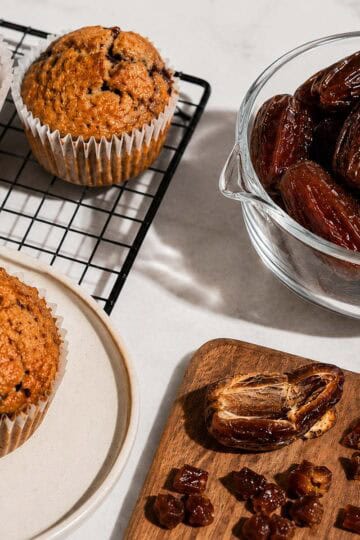
- No refined sugar: I usually sweeten muffins with bananas or dates instead of refined sugar. Dates are one of my favorite options because they also contain fiber alongside the sweetness. So if you're looking for toddler muffin recipes with no added sugar- here we go!
- Adding vegetables: I almost always include vegetables, especially carrots or zucchini because they blend in easily while adding nutrients and moisture.
- Using wholefood ingredients: Ingredients like oats, wholegrain flour, nuts, seeds, yogurt, or fruit help add more fiber and nutrients compared to highly processed ingredients.
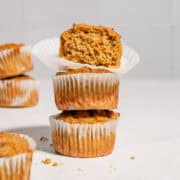
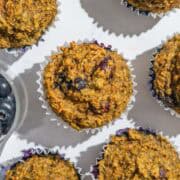
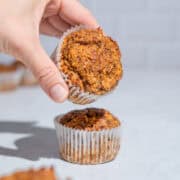
Healthy muffin recipes for toddlers & babies
Tips for success
- Don't overmix the batter: This is probably one of the biggest muffin rule. Mix until just combined- a few lumps are completely fine. I like using a silicone spatula for this. Overmixing can make muffins dense or rubbery instead of soft and fluffy.
- Measure flour properly: Too much flour can quickly make muffins dry or dense. I personally prefer weighing ingredients instead of using cups because it's more accurate and usually means less cleaning up too. If using cups, spoon the flour into the measuring cup and level it off rather than scooping straight from the bag.
- Line or grease the muffin tin well: Especially with lower-fat muffins, sticking can happen more easily. Silicone liners or parchment liners work really well.
- Use a cookie scoop: A cookie or ice cream scoop makes it much easier to divide the batter evenly between the muffin cups, which helps the muffins bake more evenly and keeps them all roughly the same size.
- Check muffins early: Every oven is slightly different. Start checking a few minutes before the recipe says they'll be done by inserting a toothpick into the middle. If it comes out clean or with just a few crumbs attached, the muffins are done. If there's still wet batter, bake them for a few more minutes and check again.
- Cool muffins on a wire rack: Always transfer muffins to a wire rack after a few minutes in the muffin tin. This allows air to circulate underneath so the steam and moisture don't get trapped, which helps prevent soggy bottoms.
- Let muffins cool completely: Storing muffins while still warm creates condensation in the container, which can make them soggy. Muffin liners also tend to stick more when the muffins are still warm, so letting them cool fully first helps them peel away much more easily.
- Freeze extras straight away: Muffins freeze really well. I usually freeze leftovers the same day once cooled, then just thaw or warm one up when needed.
Serving suggestions by age
Once your pediatrician has cleared your baby for mixed foods and textured solids, muffins can be an easy option for breakfast, snacks, or on-the-go meals. The main thing to focus on is offering muffins with a soft, moist texture that are easy for your baby to chew and manage safely.
6+ months
Serve muffins in large strips or larger soft pieces that your baby can grab with their whole hand. Soft mini muffins can also work well. If the muffin feels crumbly or dry, try serving it with yogurt to add moisture.
9+ months
At this stage, a lot of babies can usually manage smaller pieces more easily and start practicing their pincer grasp. You could try breaking muffins into bite-sized pieces for self-feeding.
12+ months
Toddlers can often eat muffins independently by this age. You could serve whole or halved muffins alongside other foods to make it a more balanced snack or breakfast.
FAQs
They can be, but it really depends on the ingredients. Many store-bought muffins are high in refined sugar, saturated fat, and low in fiber, making them more similar to cake than a balanced snack.
Healthier muffins are usually made with more wholefood ingredients like oats, wholegrain flour, (hidden) veggies, yogurt and are usually sweetened with fruit or very little sugar. I also personally prefer muffins with little added sugar and moderate amounts of oil to keep them more balanced and filling.
It is possible for a baby to choke on a piece of muffin, just like with any other food, but muffins themselves are not considered a common choking hazard. Babies and young children should always be supervised while eating. The most important thing is the texture. Muffins should be soft, moist, and easy to chew.
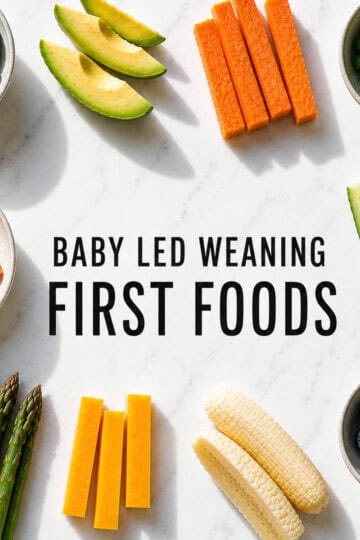
I'd also always avoid adding large chopped nuts or pieces of dried fruit to muffins for younger babies, as these are more common choking hazards. You can read more about foods to avoid in my Baby-Led-Weaning First Foods article.
Muffins themselves are not considered a common allergen, but they often contain ingredients that are. Common muffin allergens can include wheat, milk, eggs, soy, and nuts depending on the recipe.
If serving muffins to a baby for the first time, it's a good idea to check the ingredients carefully and introduce common allergens individually where possible, especially if there is a family history of allergies.