Mango Baby Food (Puree & BLW)
Mango is one of my favorite first baby foods! Learn how to prepare mango for baby led weaning or as a smooth mango puree in just minutes using fresh or frozen mango.
Asking yourself how to make mango baby food? Then this post is for you!
I introduced mango early on with my daughter, and she immediately loved the taste of it and she still does! It's one of her favorite purees mixed into her baby overnight oats, especially because it adds so much natural sweetness and creaminess.
If you're just getting started with feeding solids, I'd recommend having a quick read through these guides first:
- Baby-Led Weaning First Foods- a simple guide to help you get started
- BLW vs. Purées- walks you through both approaches
- Baby-Led Weaning Utensils- my favorite beginner-friendly feeding tools
Jump to:
Mango Baby Led Weaning
6 months
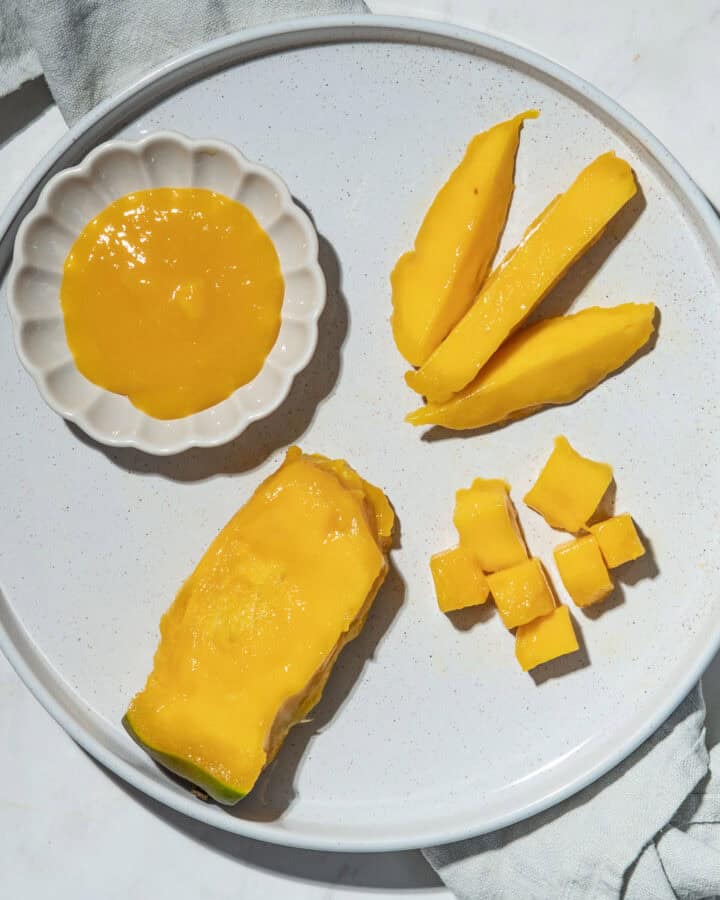
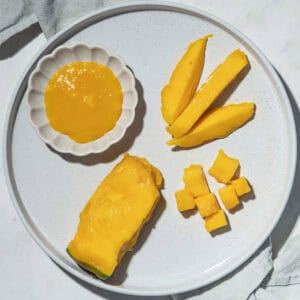
For younger babies just starting solids, I like offering the mango pit with most of the flesh removed. My daughter loved chewing on it, and it was surprisingly easy for her to hold. Just make sure there aren't large loose chunks attached.
Another great option would be serving mango as large soft spears that are easy to grab with little hands. Very ripe mango works best (it should mash easily when pressed between your thumb and pointer finger) here because the softer texture makes it easier and safer for babies to chew and mash with their gums.
Because mango can get very slippery, some people suggest lightly rolling the spears in something like finely ground oats or shredded coconut which is supposed to make it easier to grip but I've never tried this.
9+ months
As babies get more confident with chewing and self-feeding, you can start offering smaller bite-sized mango pieces or diced cubes. At this stage, many babies develop their pincer grasp and enjoy picking up smaller pieces independently.
I still recommend using very ripe mango so the texture stays soft and easy to chew. If the mango feels firm or underripe, it's better to wait a day or two before serving.
Things to consider
- Wash thoroughly: Always wash mango thoroughly before cutting into it. This step is really important because slicing through unwashed skin can push bacteria from the outside into the flesh.
- Ripe mango: For baby-led weaning, make sure the mango is very ripe and soft. Underripe mango can be too firm and slippery, making it harder for babies to safely manage.
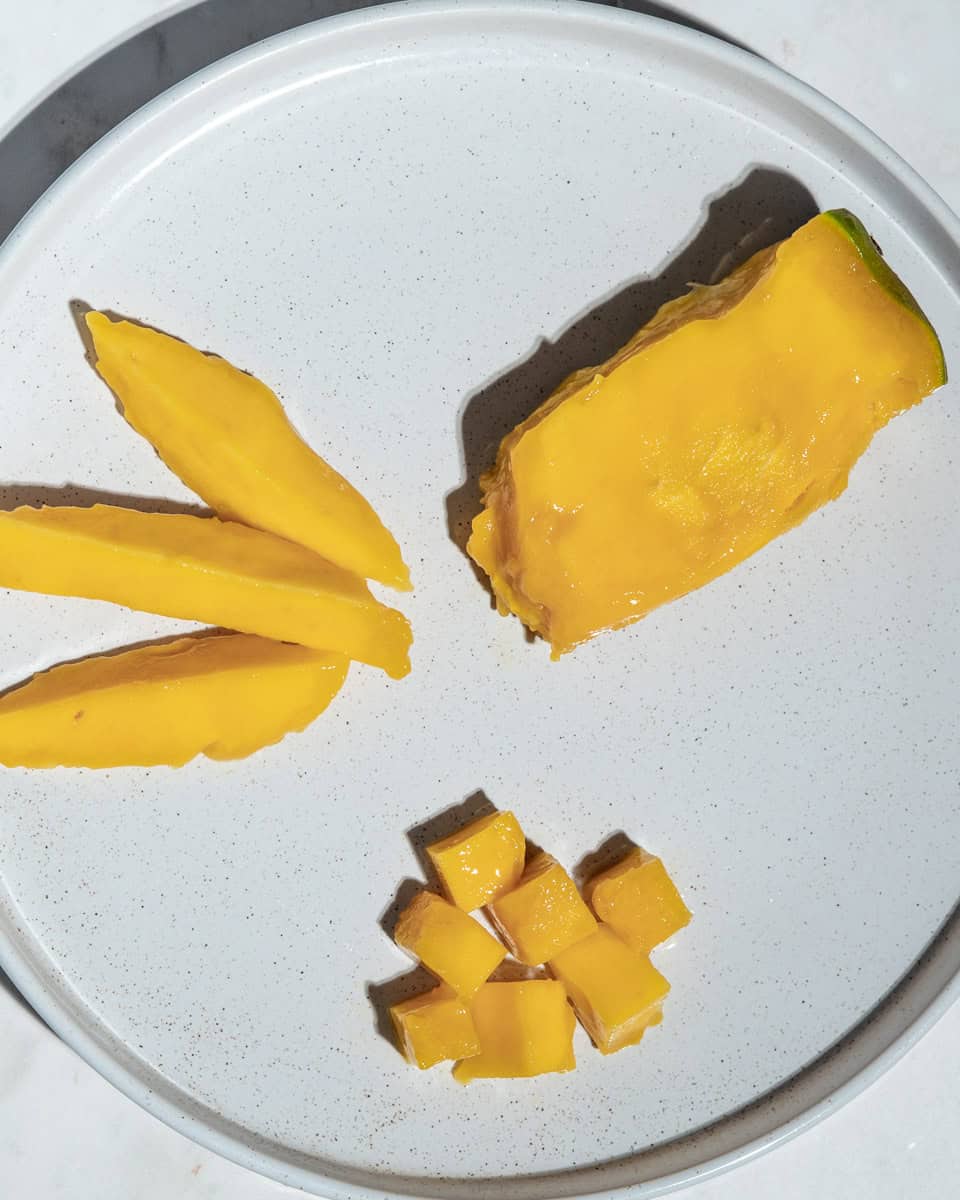
Mango Puree
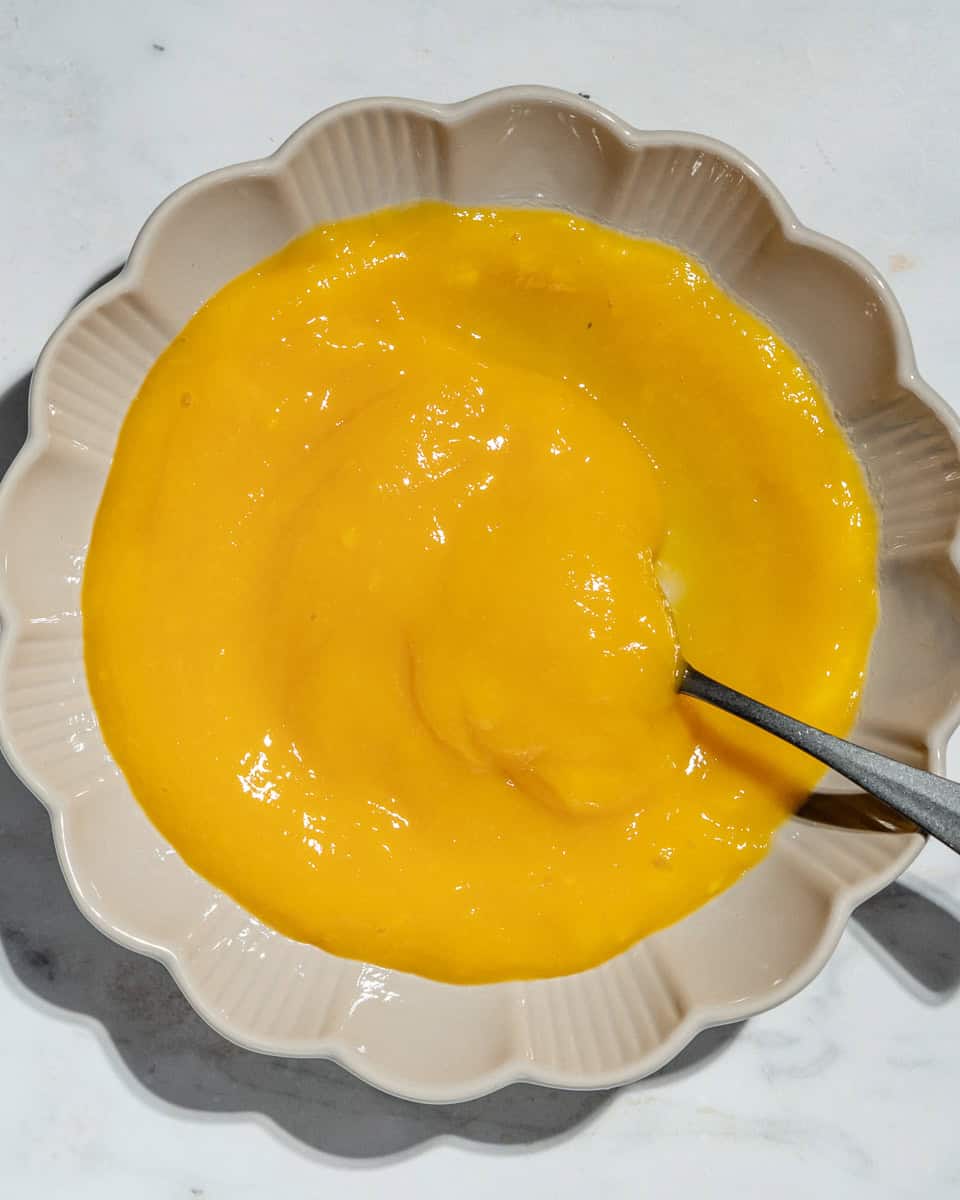
Mango puree is incredibly easy to make. Simply add ripe mango flesh to a blender or food processor and blend until smooth and creamy. You can alter the consistency by adding a bit of water.
Optional texture adjustments
For younger babies, you could blend the mango completely smooth. Older babies who are already comfortable with textured foods may prefer a slightly chunkier puree.
What about frozen mango?
Frozen mango works really well for purees and is such a handy time-saver.
Some health authorities do recommend briefly cooking frozen fruit before serving it but this usually refers to frozen berries.
A simple option is to gently heat the frozen mango until steaming, then let it cool before serving or blending. This is super easy to do and gives extra peace of mind.
Once thawed, use the mango straight away and don't refreeze!
Ingredients you'll need
- Mango: When choosing a mango, look for one that feels slightly soft and squeezable, similar to a ripe avocado. A ripe mango should also smell sweet and fruity near the stem. Don't rely too much on color alone, as different mango varieties can stay green, yellow, or red even when ripe.
- Water, as needed for thinning the puree
Step-by-step instructions
Here's a quick step-by-step with photos so you can see exactly how it comes together. You'll find the full printable recipe card down below.
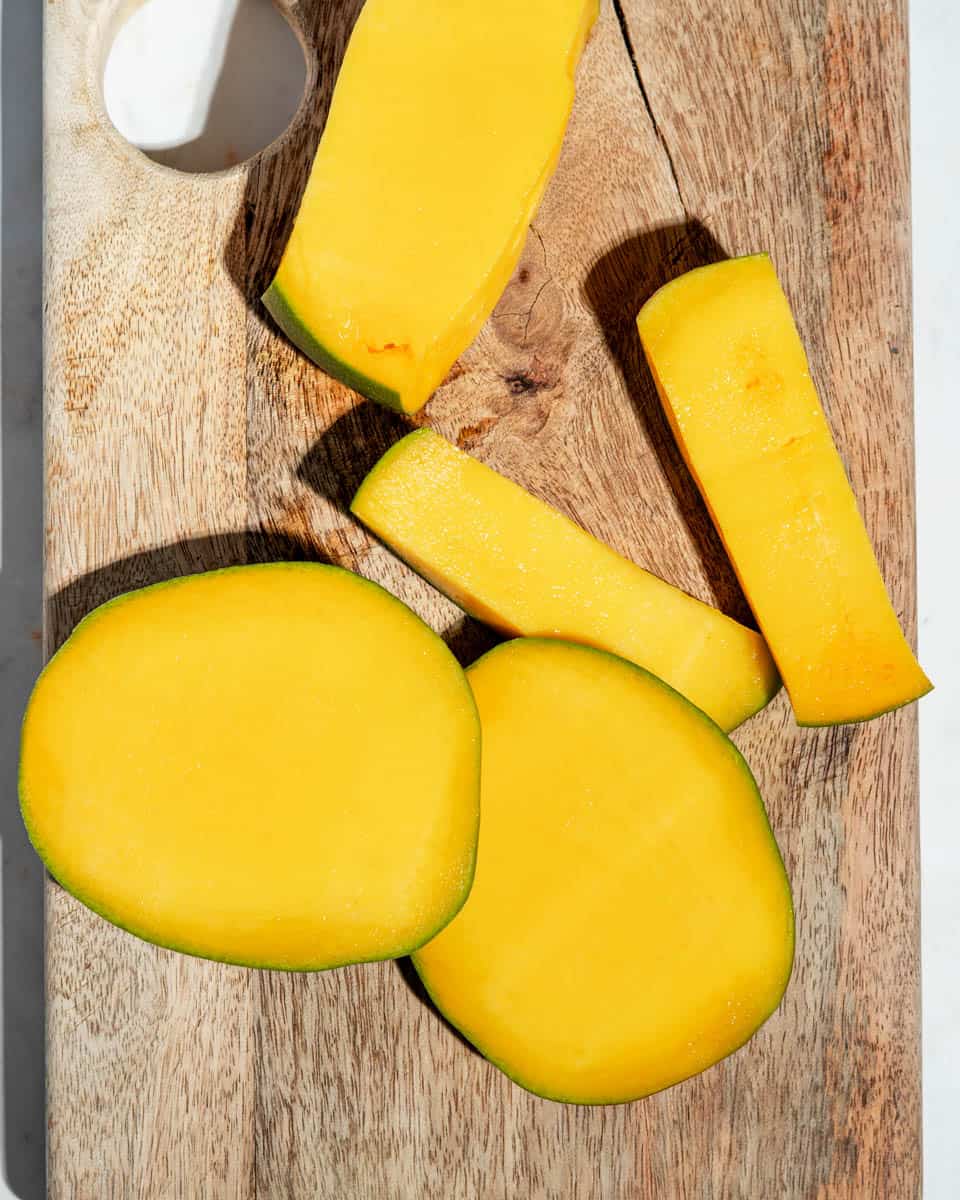
Step 1: Give the mango a good wash. Then cut off the "cheeks" first, followed by the rest of the fruit so that only the pit remains.
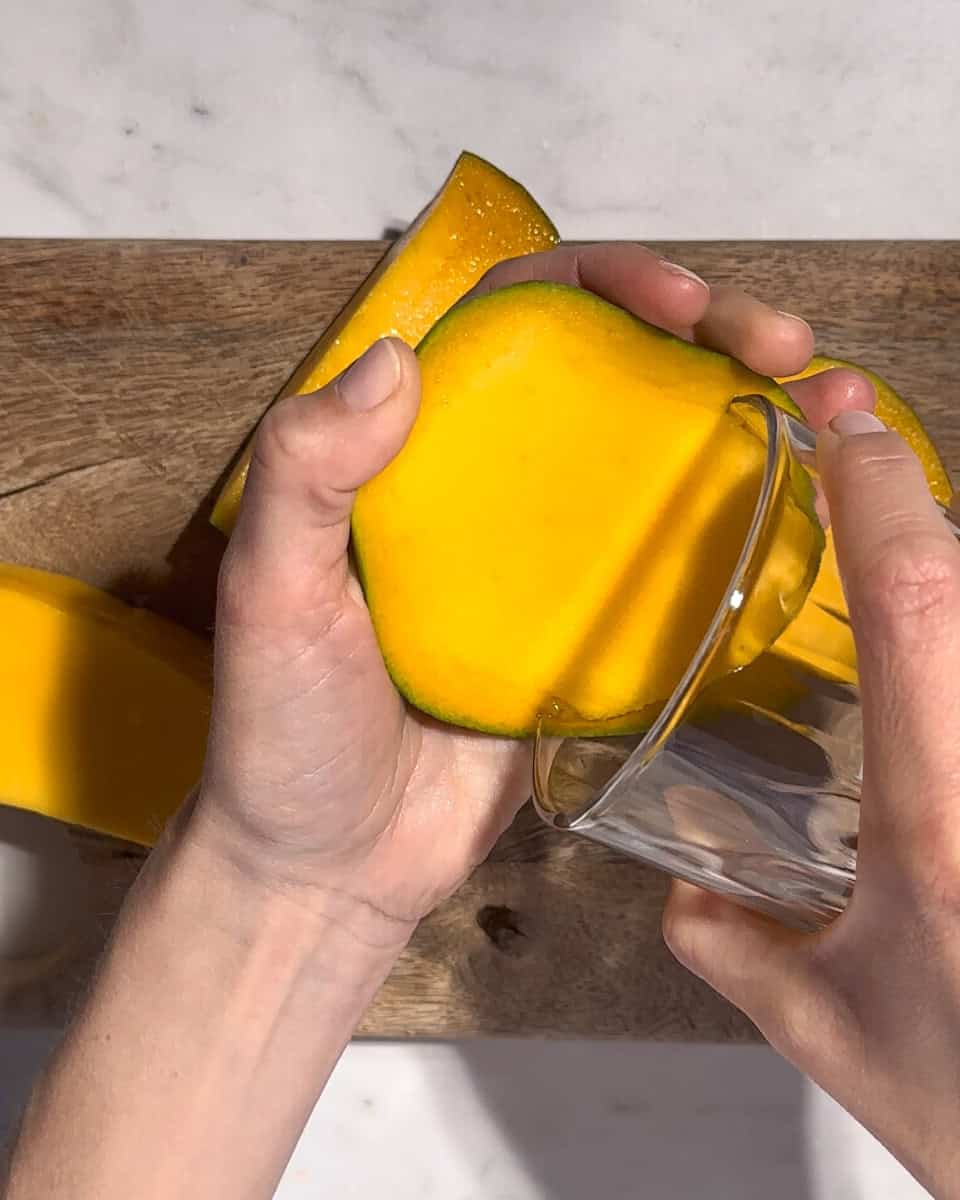
Step 2: Scoop out the flesh (it should be soft) with a small glass. That's my favorite method.
Step 3: Serve either BLW-style depending on the age of your baby.
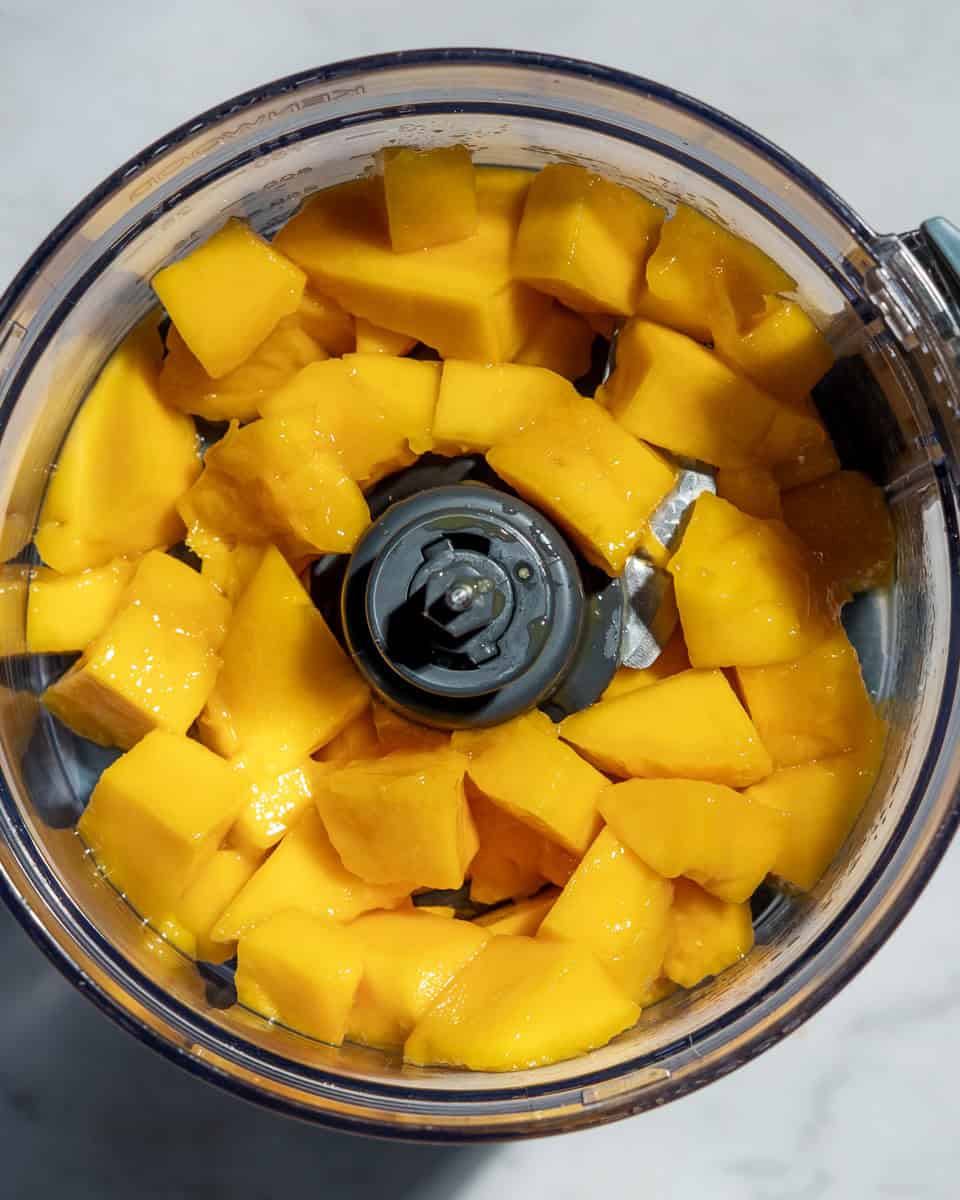
Step 4: Or add to a food processor and blend until smooth. Add water as needed.
Time saving tips
- Pre-cut mango is a great shortcut and can make prep a bit quicker. (Walmart usually has pre-cut mango slices).
- Frozen mango also works really well for making puree and is perfect to keep on hand in the freezer. Simply thaw before serving or blending. Some health authorities recommend briefly heating frozen fruit before serving but as far as I know this mostly concerns berries.
- Freeze leftovers for later use: If making puree with fresh mango, I highly recommend freezing it in silicone ice cube trays in small portions. Once frozen, you could transfer the cubes to a freezer bag so you always have ready-to-use mango puree.
- Let thaw overnight: One of my favorite little meal prep tricks is letting a frozen mango puree cube thaw overnight directly on overnight oats in the fridge.
Storage
- To store: Store puree in airtight container in the fridge for 2 days. Instead of letting it sit in the fridge I like to transfer leftover puree that I don't need that day to a silicone ice cube tray and freeze.
- To freeze: Freeze in ice cube trays. Optional: transfer cubes to freezer bag once frozen.
- Don't refreeze mango that has already been thawed.
Mango Baby Food Combinations
- Overnight oats: Stir mango puree into overnight oats for natural sweetness and extra creaminess.
- Chia pudding: Mix mango puree into chia pudding for an easy nutrient-rich breakfast or snack.
- Yogurt: Spoon mango over yogurt or for older babies and toddlers.
- Waffles or pancakes: Try the puree as a waffles or pancake topping.
- Popsicles: Freeze into homemade popsicles for toddlers during warmer months.
- Baby-led weaning snack plate: Serve alongside other soft fruits for an easy finger food option.
Serving ideas
Mango is super versatile and works beautifully in both baby food purees and meals for older babies and toddlers. Here are some delicious combinations to try:
- Banana for a naturally sweet creamy puree
- Avocado for healthy fats and extra creaminess
- Sweet potato or carrot for a filling veggie-fruit combo
- Pear or peach for an easy fruit blend
FAQs
Mango is not usually considered constipating and may actually help support digestion thanks to its fiber and high water content. Some sources even suggest mango can help relieve mild constipation in babies and toddlers. As with any food though, every baby reacts differently, so it's best introduced in moderation at first.
Yes- mango is generally considered safe for babies from around 6 months old once they are ready for solids. Just make sure the mango is very ripe and served in an age-appropriate way to reduce choking risk.
Usually, no. Ripe mango blends into a naturally smooth and creamy puree, so straining typically isn't necessary. If your mango is a little fibrous or stringy though, you can strain the puree for a smoother texture, especially for younger babies just starting solids.
More baby food recipes
Mango Baby Food
Ingredients
- 1 mango *ripe
Instructions
- Wash the mango well before cutting. This is really important, as cutting through the skin can push bacteria from the outside into the flesh.
- Slice off the right and left "cheeks" of the mango, then trim off the remaining flesh around the sides of the pit.
- Scoop out the flesh using a small glass (I like using a little shot-glass style cup for this). It's my favorite easy and mess-free method!
Mango Puree
- Transfer the mango flesh to a small food processor or blender and blend until smooth, adding a little water as needed to reach your desired consistency.
Baby-Led-Weaning (BLW) options
- For babies around 6 months, I like to offer the mango pit with most of the flesh removed for them to munch on and explore. Some people also like to serve mango as soft spears from 6 months onwards. Once your baby has developed a pincer grasp at around 9+ months, you can serve soft mango spears or bite-sized pieces. Older toddlers 12+ months often enjoy practicing their skills by picking up the mango pieces with a fork.
Equipment
- 1 cutting board + knife
- 1 food processor or blender (when making puree)
Notes
- Use ripe mango: Especially for BLW, choose very ripe, soft mangoes that should be easily squeezable between your thumb and pointer finger.
- To store: Store puree in airtight container in the fridge for 2 days. Instead of letting it sit in the fridge I like to transfer leftover puree that I don't need that day to a silicone ice cube tray and freeze.
- Time saving hack: I let frozen mango puree cubes defrost overnight directly on overnight oats in the fridge.
- Don't refreeze mango that has already been thawed.