Baking with Dates
Baking with dates instead of sugar can sometimes take a little trial and error, and I've made enough date-sweetened bakes over the years to know where things can go wrong. In this post I'll cover the basics of how dates work in baking, which types of dates to use, when date paste works best, and how to avoid the most common issues so your bakes turn out well from the start.
Can you use dates instead of sugar in baking?
Yes, you can use dates instead of sugar in baking - especially in recipes like muffins, loaf cakes, bars or brownies. Dates work best in recipes where a soft, moist texture is a good thing, rather than in bakes that depend on sugar for crispness or a very light crumb.
Why dates work as a natural sweetener
Dates are naturally high in sugars, which is why they can sweeten baked goods so well. But unlike refined sugar, they also contribute body, moisture, and flavor. That is the big difference: sugar mostly sweetens, while dates sweeten and behave like a food ingredient at the same time.
They also offer more than sweetness alone. Despite minerals and vitamins dates contain sth that other sweeteners lack: fiber! While sweeteners like maple syrup, brown sugar, and coconut sugar may contain small amounts of minerals, they don't really offer fiber in the way whole dates do. That's one of the reasons I love using dates in baking!
How dates change flavor, texture, and moisture
Baking with dates does not give you exactly the same result as baking with white sugar. Dates add a deeper flavor - often described as caramel-like - and they make baked goods feel softer, moister and also stickier. The batter usually becomes thicker and heavier than a batter sweetened with regular sugar which can make some recipes a bit more dense.
That is great in muffins, some types of cakes, bars or sweet breads. It is less ideal when you want something crisp, dry, or especially airy.
Dates also brown fairly quickly because of their natural sugar content. So even when a recipe tastes wonderful, you may notice darker edges or tops sooner than expected.
Which baked goods work best with dates
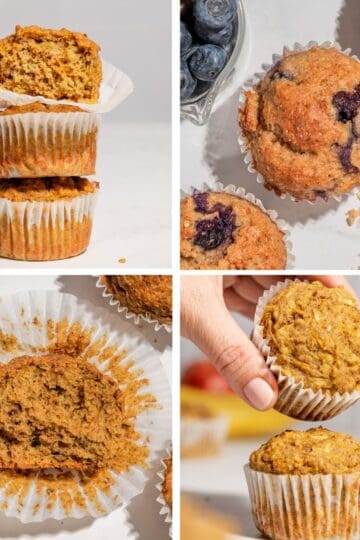
Dates work best in baked goods that already lean soft, moist, or dense in a good way.
Some of the easiest recipes to sweeten with dates are:
- muffins
- quick breads and loaf cakes
- snack bars
- brownies
- baked oatmeal
- soft cookies
These types of recipes are naturally forgiving and usually benefit from the moisture dates provide. This is one reason date-sweetened baking fits so well with toddler snacks and family-friendly bakes.
Recipes that are harder to adapt include crisp cookies anything fluffy and very delicate cakes. In those recipes, sugar does more than sweeten - it also affects spread, airiness, and structure.
Quick Summary
- Dates can replace some or all of the sugar in many baked goods.
- They work best in moist, soft recipes like muffins, bars, and quick breads.
- They add sweetness, fiber, moisture, and a rich caramel-like flavor.
- They are usually not the best choice for crisp or very fluffy bakes.
Which dates should you use for baking?
Not all dates behave exactly the same in baking, but you do not need to overcomplicate it.
Medjool vs Deglet Noor
Medjool dates are often the easiest choice for baking because they're naturally soft, sticky, and jucier, which makes them especially convenient for blending into date paste or pureeing into batters.
But Deglet Noor dates can work well too. They're usually firmer and a little drier, so they often need soaking first if you want to blend them into a smooth paste. If you want chopped dates to hold their shape in the finished bake, Deglet Noor can be a great option.
Price is worth considering too - Medjool dates are often more expensive, while Deglet Noor can be a more budget-friendly choice.
In simple terms:
- Use Medjool when you want the softest texture and easiest blending.
- Use Deglet Noor when you want a more affordable option or dates that hold their shape a bit better.
- Use either one for date paste, as long as firmer dates are soaked well first.
Whole dates vs chopped dates vs date paste
Each form of dates does a slightly different job in baking.
Whole dates are usually just the starting point. Most of the time, you will either chop them or blend them.
Chopped dates add little pockets of sweetness and chew. They work well in oatmeal bars, cookies or date breads.
Date paste is the best option when you want dates to act as the main sweetener. It blends sweetness through the whole batter and gives a smoother texture than chopped dates. If your goal is to learn how to sweeten baking with dates, date paste (pureed dates) is the most useful form to start with.
Common Problems When Baking With Dates
Even when date-sweetened baking tastes great, the texture can surprise you the first time. Most problems come down to moisture, structure, or expectations.
Why date-sweetened bakes turn out dense
The most common reason is that dates add both bulk and moisture. Unlike sugar, they do not dissolve into the batter in the same way. That means the finished bake often has a heavier texture.
Dense results are especially likely when:
- the recipe is already heavy
- there is too much date paste
- extra wet ingredients were not adjusted
- the batter was meant to be light and fluffy in the first place
If you are just getting started, choose recipes that are supposed to be soft and tender, not airy.
Why they are not sweet enough
Date-sweetened baking often tastes less sharp and sugary than conventional baking. The sweetness is softer and more mellow.
That does not necessarily mean the recipe failed. It may just taste different from what you are used to. If needed, you can:
- use very soft, ripe Medjool dates for stronger sweetness
- increase the date paste slightly
- pair dates with naturally sweet ingredients like banana or apple
- add vanilla, cinnamon, or cocoa to make the sweetness feel fuller
Frequently Asked Qustions
Can I replace sugar with dates in muffins?
Yes. Muffins are one of the best places to start because they are naturally moist and forgiving. Date paste works especially well in banana muffins, applesauce muffins, oat muffins, and other soft snack bakes.
Do I need to reduce liquid when using date paste?
Usually, yes - at least a little. Date paste adds moisture as well as sweetness, so some recipes need less milk, water, or other liquid ingredients. The exact amount depends on the recipe, which is why date paste works best in flexible bakes rather than delicate ones.
What recipes work best with dates as the main sweetener?
The best choices are muffins, quick breads, snack bars, brownies, baked oatmeal, and soft cookies. These recipes welcome the moisture and richness that dates bring, rather than fighting against it.
If you're planning to build this into your content hub, this post should link naturally to your roundup of date-sweetened recipes right after the section on which baked goods work best. That keeps this article focused on the method while the roundup handles recipe inspiration.